



Fresh strike on tanker adds to Hormuz shipping turmoil
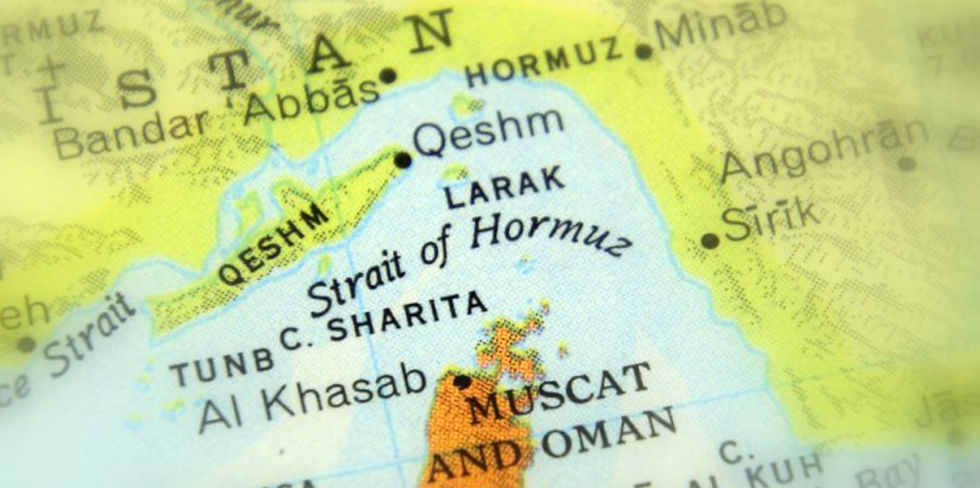
October 5 ------ A tanker was struck by an unknown projectile while transiting the Strait of Hormuz on 1 October, triggering a fire aboard the vessel and adding to growing security concerns around one of the world’s most important maritime chokepoints.
The UK Maritime Trade Operations (UKMTO) said it received a third-party report of the incident at 1750 GMT. The crew was reported safe, although the extent of the damage to the tanker and any potential environmental impact remained unclear.
Iran’s semi-official Fars News Agency, citing local sources, reported earlier that a supertanker with a capacity of about 2.5 million barrels had been hit roughly 8 kilometers off the Omani coast and caught fire. Fars said the vessel had been sailing on an “unauthorized route” through the strait.
The incident comes amid repeated warnings over vessels using routes that have been designated as non-compliant by the relevant authorities. In a statement issued on 1 October, the PGSA said several oil tankers had been struck in the Strait of Hormuz in recent weeks, with the three most recent incidents involving vessels owned or chartered by companies in the United Arab Emirates.
According to the PGSA, the tankers Al Ruwais, Sinbad and Mersin Prosperity had attempted to transit the Strait of Hormuz multiple times over the past two months. The three vessels also appear on the authority’s latest non-compliance list.
The PGSA has repeatedly warned shipowners and charterers against forcing vessels to use unauthorized routes, saying such decisions expose ships, crews, owners and masters to financial and operational losses and could result in restrictions on future passage through the strait. Charterers found to have pressured vessels into what the authority considers illegal transits may also be added to the non-compliance list, potentially resulting in restrictions on the passage of other vessels associated with them. Ships placed on the list can face a range of measures, including fines, detention or confiscation.
Oil flows adapt to Strait of Hormuz disruption
Despite the continuing security risks, crude exports through and around the Strait of Hormuz have increasingly adapted to the disruption caused by the Iran war. Oil producers and shipping companies have expanded their use of alternative routes and transfer arrangements to keep Middle Eastern crude moving.
Pipeline exports and ship-to-ship transfers are among the measures being used, while the US military continues to escort some vessels. Refined-product flows, however, remain more constrained, particularly for diesel, contributing to higher prices.
At least 16.5 million barrels per day (bpd) left the region in September, according to data from global trade intelligence firm Kpler. That figure was broadly in line with the pre-war average, excluding Iran, and represented an increase of 10.5 million bpd from the monthly average recorded in March, during the first weeks of the conflict.
The disruption has also accelerated efforts to reduce dependence on the strait. Around 40% of the region’s crude is now transported without passing through the Strait of Hormuz, compared with about 17% before the war, according to Kpler analysis.
Saudi Arabia and the UAE have increased the use of pipeline infrastructure to move crude to export terminals outside the strait. Saudi Arabia, in particular, restarted operations on its East-West pipeline in late September after the system was damaged in drone attacks, enabling exports to resume from the Red Sea port of Yanbu.
Tankers operate with transponders switched off
Shipping patterns through the strait have also changed. According to Kpler, much of the crude still moving through the Strait of Hormuz is being carried by a shuttle fleet dominated by very large crude carriers (VLCCs). Many of these vessels are sailing with their automatic identification system (AIS) transponders switched off.
Cargo is then transferred between tankers at sea, with ship-to-ship operations typically taking place off Oman or near Fujairah in the UAE.
The latest tanker incident highlights the increasingly complex operating environment facing owners, charterers and crews navigating the Strait of Hormuz.
While alternative routes and transfer arrangements have allowed substantial volumes of crude to continue reaching international markets, vessels operating in and around the strait remain exposed to security, regulatory and operational risks.
Source: safety4sea.com

Comments