


Chinese warships shadow PH, US, Australian vessels during drills
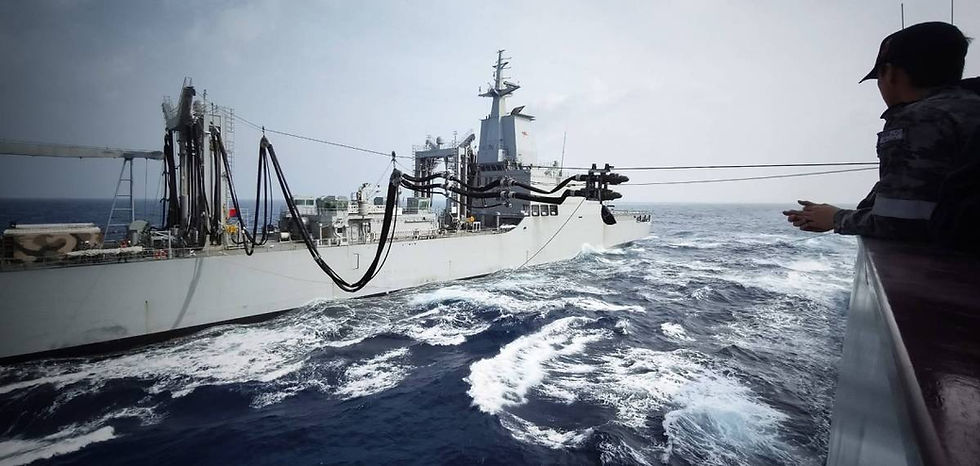
WEST PHILIPPINE SEA, August 27 ------ Chinese naval and coast guard vessels shadowed Philippine, Australian and US ships throughout a five-day multinational maritime exercise in the West Philippine Sea, with a Chinese warship and a Philippine Navy vessel exchanging radio challenges over competing claims around Sabina Shoal.
The Manila Times, which covered the 19th Multilateral Maritime Cooperative Activity (MMCA) aboard the Philippine Navy's BRP Diego Silang (FF-150), heard the radio exchanges as Chinese vessels monitored the participating forces during the exercise.
The Chinese vessel identified over the radio as Chinese Navy warship 536 asserted China's sovereignty over Sabina Shoal, which Beijing calls Xianbin Jiao, and ordered the Philippine vessel to leave the area. "Philippine warship 07, this is Chinese Navy warship 536," the Chinese vessel said.
The Chinese side claimed what it described as China's "indisputable sovereignty" over Nanshan Shintao and adjacent areas, including Xianbin Jiao, and ordered the Philippine vessel to leave the vicinity. The Philippine side rejected the demand. "Chinese warship 536, this is Philippine Navy warship 7. You are within the Philippine exclusive economic zone and the Kalayaan Island Group," the Philippine vessel responded.
The Philippine vessel invoked the United Nations Convention on the Law of the Sea (Unclos), saying the Chinese vessel's statements and actions were illegal and subject to Philippine national security measures. The radio exchanges took place as Chinese naval and coast guard vessels shadowed Philippine and US ships participating in the MMCA, which ran from Aug. 21 to 25.
Capt. John Percie Alcos, commanding officer of BRP Diego Silang, said the Philippine frigate was shadowed by a Luyang-class guided missile destroyer, a Jiangkai II-class guided missile frigate, a Hubei-class missile boat and two Chinese coast guard vessels.
The Philippine Coast Guard's BRP Teresa Magbanua was also shadowed by a Chinese coast guard vessel, while the US vessel USS Santa Barbara was followed by a Jiangdao-class corvette, Alcos said. The Chinese vessels generally maintained a distance of about 2 to 4.5 nautical miles from the participating ships.
Alcos said the presence of Chinese People's Liberation Army Navy and China Coast Guard vessels had been observed during several Philippine exercises this year. "Yes, we have conducted several exercises this year, and we have noticed the presence of several People's Liberation Army Navy vessels or Chinese coast guard vessels in the vicinity," he said.
Asked what the Chinese vessels normally do during such activities, Alcos said they generally positioned themselves at a safe distance of around 2 to 4.5 nautical miles. Despite the shadowing and radio challenges, Alcos said the Chinese vessels did not physically interfere with the conduct of the exercise.
The participating forces completed their planned Maritime Domain Awareness Serial, detecting, identifying and tracking air and surface assets in the exercise area while also scanning for possible subsurface threats. The exercise involved Philippine, US and Australian forces. Australia's participating naval assets included HMAS Supply, a Supply-class auxiliary oiler replenishment ship. Alcos said the exercise was intended to strengthen the participating forces' ability to conduct combined maritime operations.
The Chinese shadowing and radio exchanges occurred amid continuing tensions in the West Philippine Sea, where Philippine and Chinese naval and coast guard forces regularly operate in close proximity. The Philippines maintains that Sabina Shoal is within its exclusive economic zone and that its maritime rights in the area are protected under international law, including Unclos. China continues to assert sovereignty over the shoal and other areas of the South China Sea. Despite the presence of Chinese vessels and the radio exchanges, the multinational exercise proceeded as planned.
Source: manilatimes.net


Comments