


Industry groups urge stronger collision prevention measures across ports & terminals
- 8 hours ago
- 2 min read
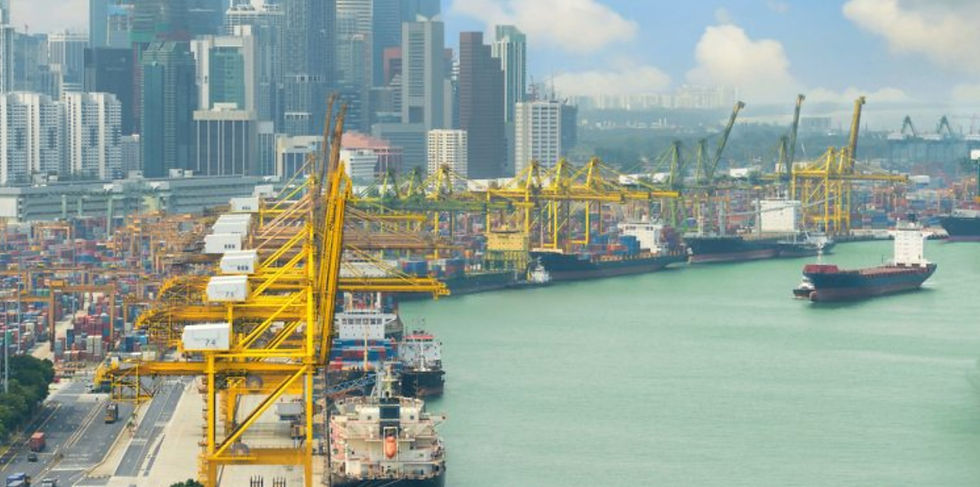
August 14 ------ PEMA, TT Club and ICHCA International have joined forces to promote stronger collision-prevention measures at ports and terminals, aiming to reduce injuries and fatalities, equipment damage and costly operational disruptions.
The organizations highlight the growing availability of advanced, non-contact collision-prevention technologies that can significantly improve equipment safety and reduce risks associated with container handling. However, many of these systems are not yet covered by national or international standards.
The groups argue that collision prevention should be a general requirement across all types of port and terminal equipment. Obstacles should be continuously monitored or detected in the direction of travel across the full operating range of equipment and its attachments.
They also call for controlled-stop functionality to be treated as a basic safety requirement for large equipment and for the feature to be clearly identified on machinery.
Technology, however, is only one layer of an effective terminal safety strategy. The organizations stress the importance of complementary measures, including the segregation of operational areas, equipment and personnel; clearly marked traffic flows; physical barriers; appropriate signage; and effective information, instruction and training.
Container terminals inherently present significant safety challenges, with vehicles, heavy machinery and personnel often operating in close proximity.
Yet the similarities between terminals and their operations also create an opportunity to identify, model and address recurring collision scenarios across different equipment types and operating methods.
Collision cases
Collision incidents at ports and terminals can generally be divided into three categories: equipment striking people; equipment colliding with other equipment, potentially injuring personnel as a result; and equipment colliding with fixed obstacles.
The severity and consequences of such incidents can vary significantly, ranging from injuries and fatalities to equipment damage and costly repairs or replacement. Collisions can also result in lost production time and wider operational disruptions, including delays to vessel departures.
Beyond the immediate financial and operational impacts, such incidents can affect shipping lines’ confidence in a port and contribute to a sense of insecurity among employees, potentially undermining trust in the employer.
Equipment types
Collisions can involve a wide range of mobile equipment operating within container ports. Common examples include ship-to-shore (STS) cranes, yard cranes such as RTGs, RMGs and ASCs, automated guided vehicles (AGVs), mobile harbor cranes, trucks, cars, straddle carriers, reach stackers, empty-container handlers and forklifts. Trains operating within terminals, particularly where cargo is transferred to rail, can also be involved in collision incidents.
Source: safety4sea.com


Comments