


IMO: 80 attacks on ships around Hormuz have killed at least 22 seafarers

September 18 ------ Escalating geopolitical tensions are placing merchant shipping and seafarers under growing threat across several major trading regions, with IMO warning that civilian vessels and crews must not become targets of conflict.
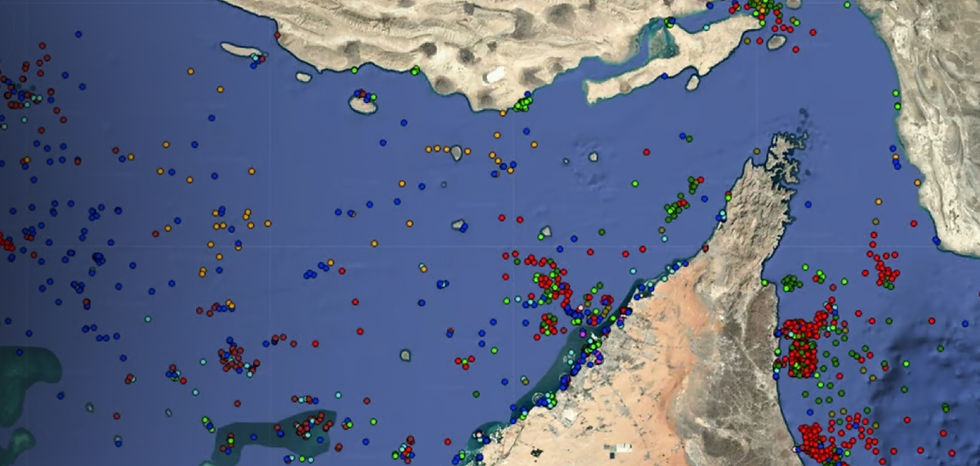
Speaking in London at the IMO Sub-Committee on Carriage of Cargoes and Containers (14–18 September), IMO Secretary-General Arsenio Dominguez warned that geopolitical tensions are exacting an increasingly deadly toll on commercial shipping. The warning comes as the IMO has verified 80 attacks on international shipping in and around the Strait of Hormuz since 28 February, leaving at least 22 seafarers dead and many others injured. "We are reaching a point where these conflicts are being used as a pretext to attack merchant vessels and innocent seafarers. Do not use these conflicts to attack innocent seafarers," Dominguez said.
The threat, however, extends well beyond the Gulf. In the Black Sea and Sea of Azov, dozens of fatalities have reportedly resulted from attacks on international shipping in recent months, although the IMO said precise figures remain difficult to verify.
Meanwhile, attacks on shipping in the Red Sea have resumed, with four fatalities confirmed following a Houthi attack on a merchant vessel on 11 August. Dominguez stressed that the attacks across the different conflict zones cannot be attributed to a single actor. “In the Strait of Hormuz, it is not only one country attacking merchant vessels. In the Black Sea and Sea of Azov, it is not only one country attacking merchant vessels,” he said.
Shipping caught in geopolitical crossfire
While the IMO does not have a mandate to address the root causes of geopolitical conflicts, Dominguez said their consequences are increasingly being felt across global shipping and trade.
He urged Member States to raise the impact on international shipping with their governments and through the appropriate international forums, stressing that disruptions to maritime operations ultimately extend beyond the shipping sector to economies, supply chains and consumers. "I call on you to share these impacts with the relevant bodies in your countries so that this can be dealt with within the United Nations, as appropriate. It falls to you and your capitals, and relevant bodies of the United Nations, to address the root causes and find solutions," Arsenio Dominguez highlighted
The IMO Secretariat, Dominguez added, remains ready to contribute to workable solutions that Member States can advance at the technical and operational level.
The Sub-Committee on Carriage of Cargoes and Containers is meeting in London from 14–18 September, with discussions covering maritime safety issues related to the transport of dangerous goods, bulk cargoes and containers.
The psychological toll cannot be overlooked
For seafarers, surviving an attack or navigating a high-risk area may be only the beginning of the ordeal. Fear, uncertainty, fatigue and concern for family ashore can linger long after the immediate threat has passed, creating a psychological burden that is often less visible than physical injuries.
According to marine psychologist and IMEQ Managing Director Alexandra S. Kaloulis, geopolitical stress at sea may emerge gradually through disrupted sleep, heightened anxiety, irritability, emotional withdrawal or hypervigilance. While these reactions can be normal responses to abnormal levels of pressure, they can also affect concentration, decision-making, teamwork and ultimately safety onboard if left unaddressed.
This is where Psychological First Aid (PFA) can play an important role. Rather than waiting for distress to escalate, early support aims to help seafarers regain a sense of safety and control, while connecting those who need it with appropriate professional care.
For masters and officers, recognizing changes in behavior and creating an environment where crew members can speak openly about distress can therefore become an important part of the wider safety response.
As geopolitical risks increasingly become part of life at sea, protecting seafarers means addressing not only the physical dangers of an incident, but also its psychological aftermath.
Source: safety4sea.com

Comments