


Green transition is necessary but not at the expense of shipping
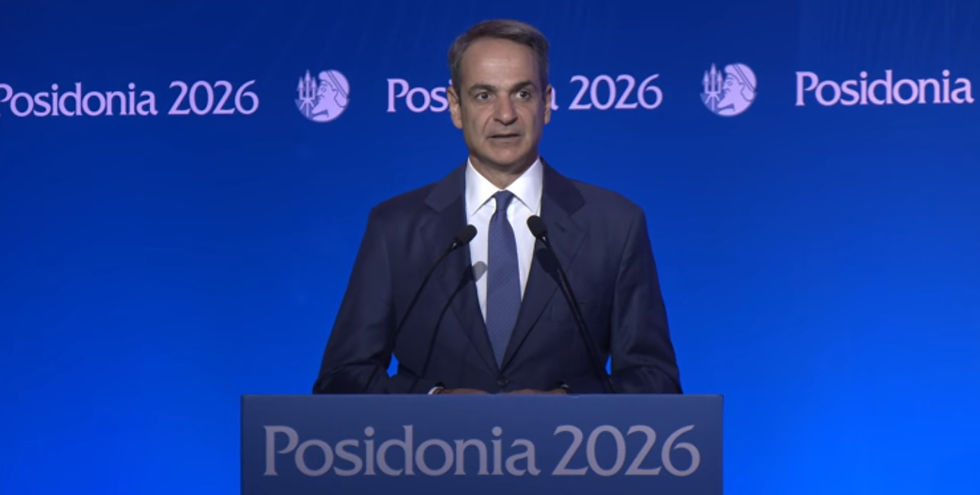
June 3 ------ Addressing the opening of Posidonia 2026 (1-5 June), the Prime Minister of Greece, Kyriakos Mitsotakis, highlighted the global scale and strategic importance of the maritime sector, describing the event as one of the world’s largest gatherings of the shipping industry.
Posidonia reinforces Greece’s position as a central hub where the “heart of global shipping” beats. According to the Prime Minister, the exhibition opens a window into the future of the industry, showcasing innovation, technological transformation and emerging trends in a sector that has consistently demonstrated its ability to adapt and lead. Shipping, he said, has always turned challenges into opportunities, navigating turbulent waters while maintaining its fundamental mission of connecting and supplying the world economy.
Mitsotsakis pointed to Greece’s position as the world’s leading shipping nation, noting that the Greek-owned fleet exceeds 5,800 vessels, accounting for approximately 20% of global capacity and more than 60% of European-owned tonnage. Greek shipping, supports around 8% of Greece’s GDP and directly or indirectly sustains approximately 200,000 well-paid jobs.
Beyond shipping operations, it was noted that Greek shipowners invest more than €1.5 billion annually across tourism, energy, banking and sports, while also maintaining a strong social footprint through both collective and individual philanthropic initiatives. However the Prime Minister, warned that recent geopolitical shocks have once again highlighted the strategic importance of shipping, recalling a study presented two years earlier on the global consequences of a potential disruption to maritime trade.
As explained, events such as the closure of critical sea lanes, including the Strait of Hormuz, have demonstrated how quickly freight costs, inflation and energy supply chains can be affected. "You understand the significant geopolitical and geo-economic power that our country derives from the fact that 25% of the global fleet and more than 80% of the European oil and LNG transport fleet is owned by our shipowners, while shares in dry bulk shipping are also very high. The goods and raw materials transported by Greek-owned vessels are critical—not only from our own ports, of course, but, as we have seen, serving the needs of more than 170 countries worldwide, "the Prime Minister highlighted.
Maritime security
Referring to Greece’s presidency of the United Nations Security Council, he recalled that the country had already prioritized maritime security as a central theme, a choice he said had proven prescient. Mitsotsakis also referenced Greece’s participation in the EU naval operation “Operation ASPIDES”, aimed at protecting freedom of navigation in the Red Sea and Gulf of Aden, including the deployment of the frigate “Psara” equipped with the domestically developed anti-drone system “Centaur”.
He reiterated Greece’s position on the Strait of Hormuz, calling for a return to the previous status quo guaranteeing free passage without additional charges or restrictions, and said Athens would continue to raise the issue at the UN Security Council.
Greece urges balanced approach to maritime decarbonisation
Turning to the energy transition, he acknowledged the need to reduce emissions across all sectors, including shipping, but stressed that decarbonization must not undermine competitiveness or global supply chains. He described green transition as essential but warned against measures that could impose excessive costs or distort competition. "The green transition is necessary, but under no circumstances—and I repeat, under no circumstances—can it come at the expense of the competitiveness of shipping, and through it, of society and production," Kyriakos Mitsotakis noted.
Furthermore he explained that the Greek-owned fleet is already investing heavily in energy efficiency technologies and alternative fuels, while Greece itself has become a leader in renewable energy production. The country, he said, now ranks among the top globally in solar and wind energy generation and has transitioned from an electricity importer to a regional exporter.
The Prime Minister also pointed to investments in shore-side electricity (cold ironing) infrastructure and expressed openness to emerging discussions on nuclear propulsion for commercial shipping applications.
However, he underlined the need for pragmatism, stressing that LNG remains a critical transitional fuel and that alternative fuels are still in the early stages of development, accounting for only a small fraction of global demand. Europe, he argued, must adopt a realistic and competitive energy strategy that builds on its strengths rather than weakening its industries. He called for greater alignment between European and international regulatory frameworks, particularly within the IMO, to ensure fair competition and avoid fragmentation or protectionism. Shipping, he said, must be recognized as a strategic sector requiring tailored policy approaches rather than uniform regulatory treatment.
Call to attract younger generations to modern maritime industry
The Prime Minister emphasized the importance of attracting younger generations to maritime professions, noting that modern shipping bears little resemblance to outdated perceptions of the industry. With digitalization and artificial intelligence increasingly integrated into operations, from route optimization to fuel efficiency and automation, he noted the human factor would nevertheless remain essential.
Concluding his remarks, he expressed confidence in the continued global leadership of Greek shipping, even amid what he described as a “perfect storm” of overlapping crises and transformation pressures, however, Greece would remain a committed partner to the industry.
Source: safety4sea.com


Comments